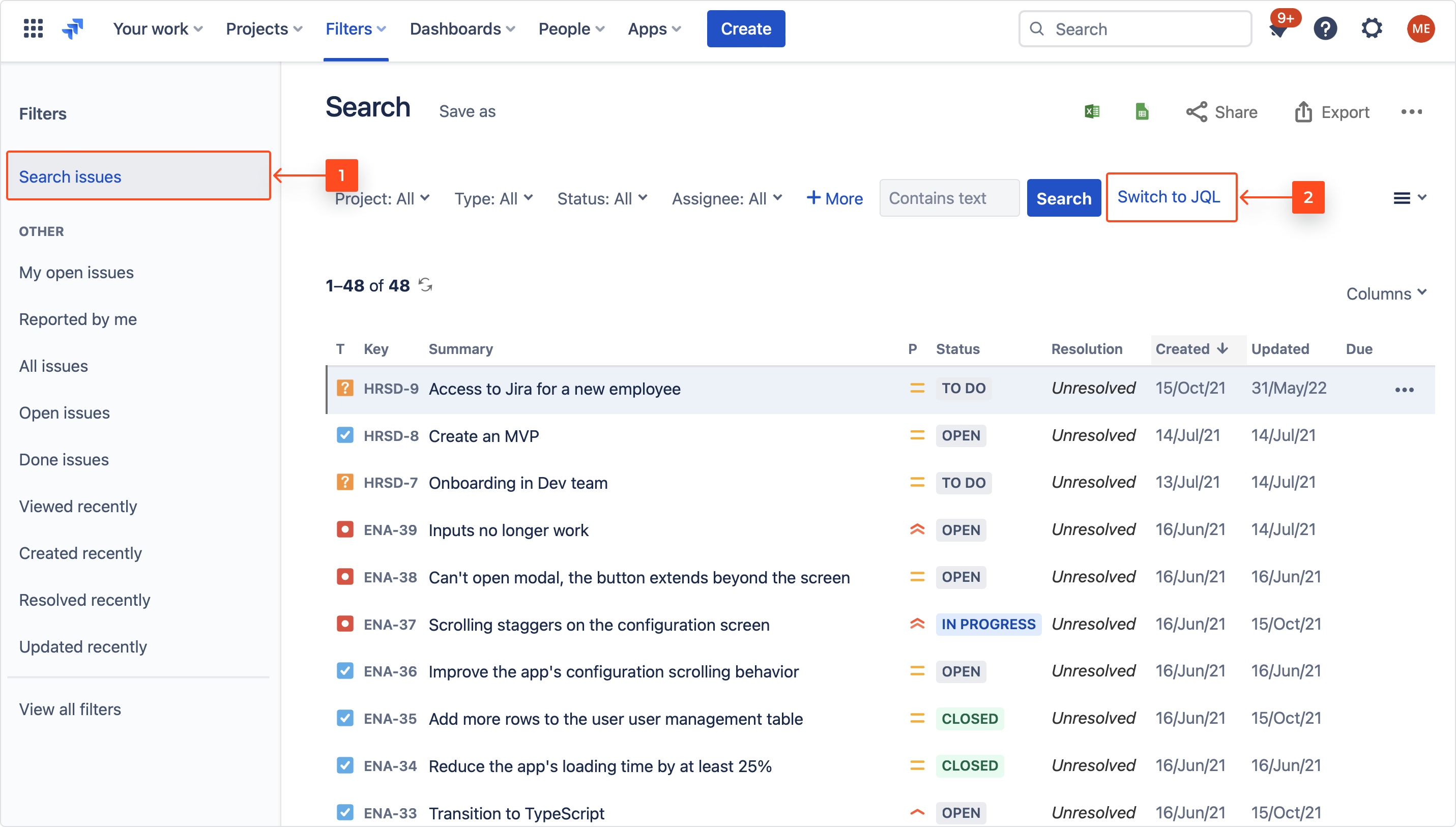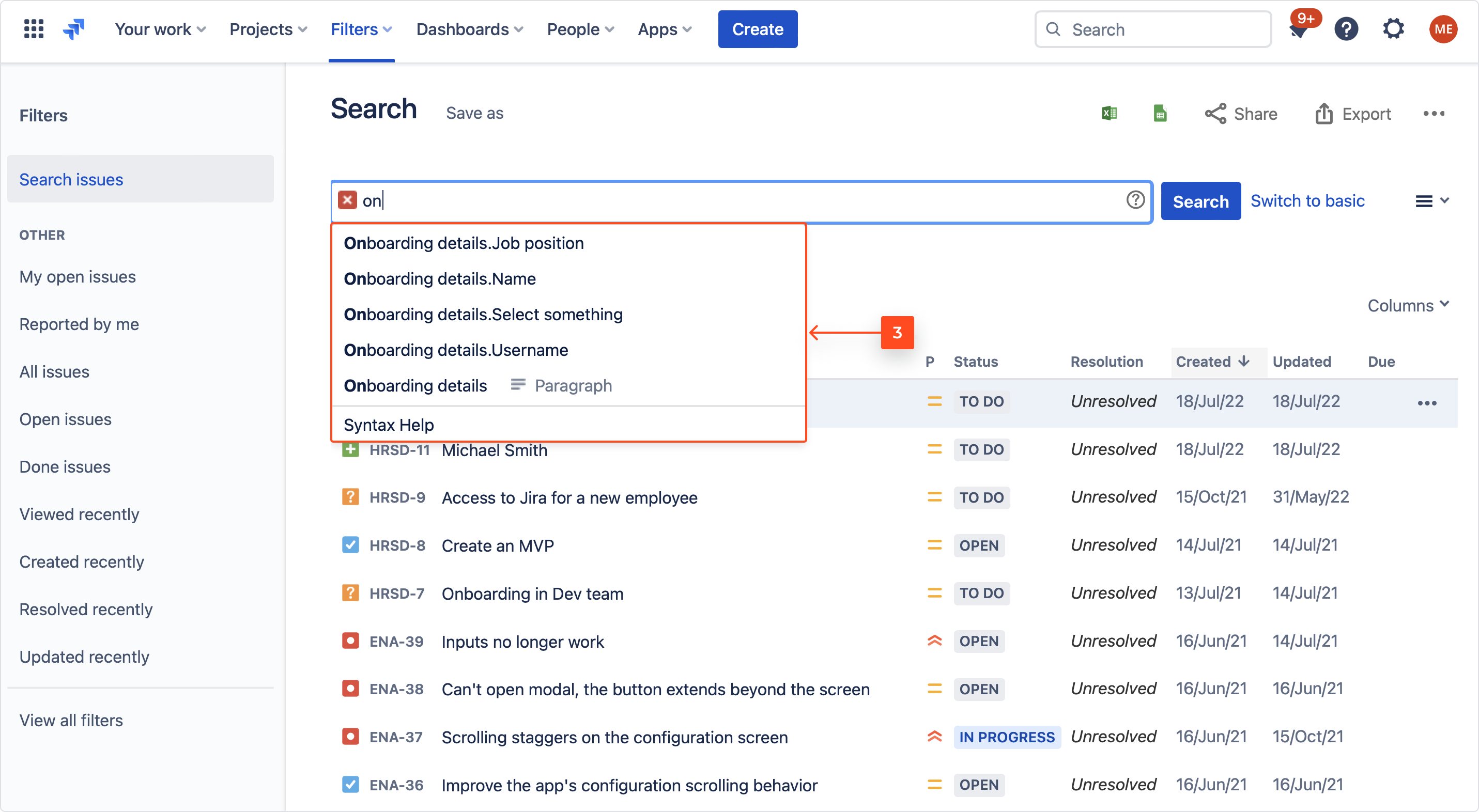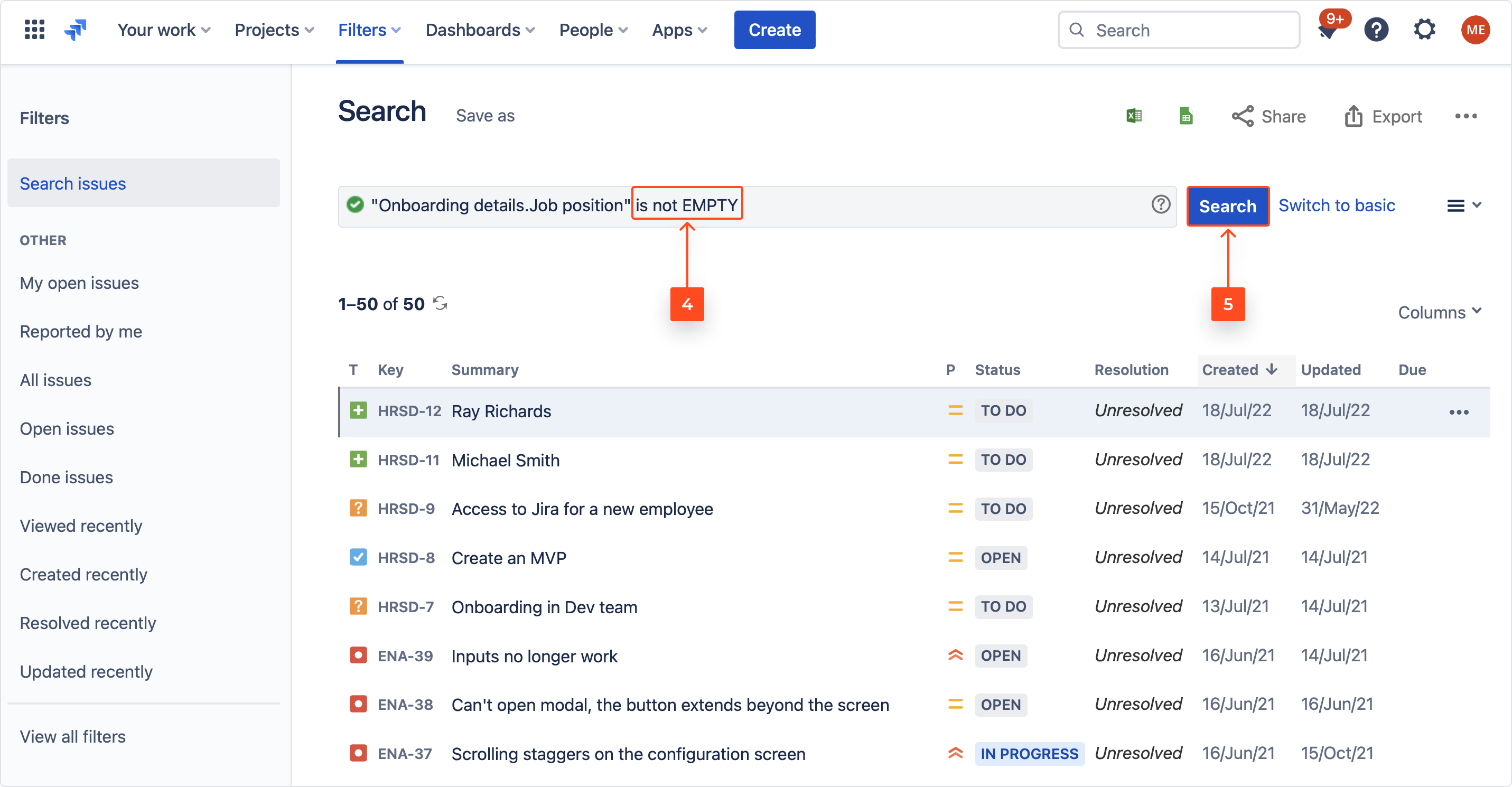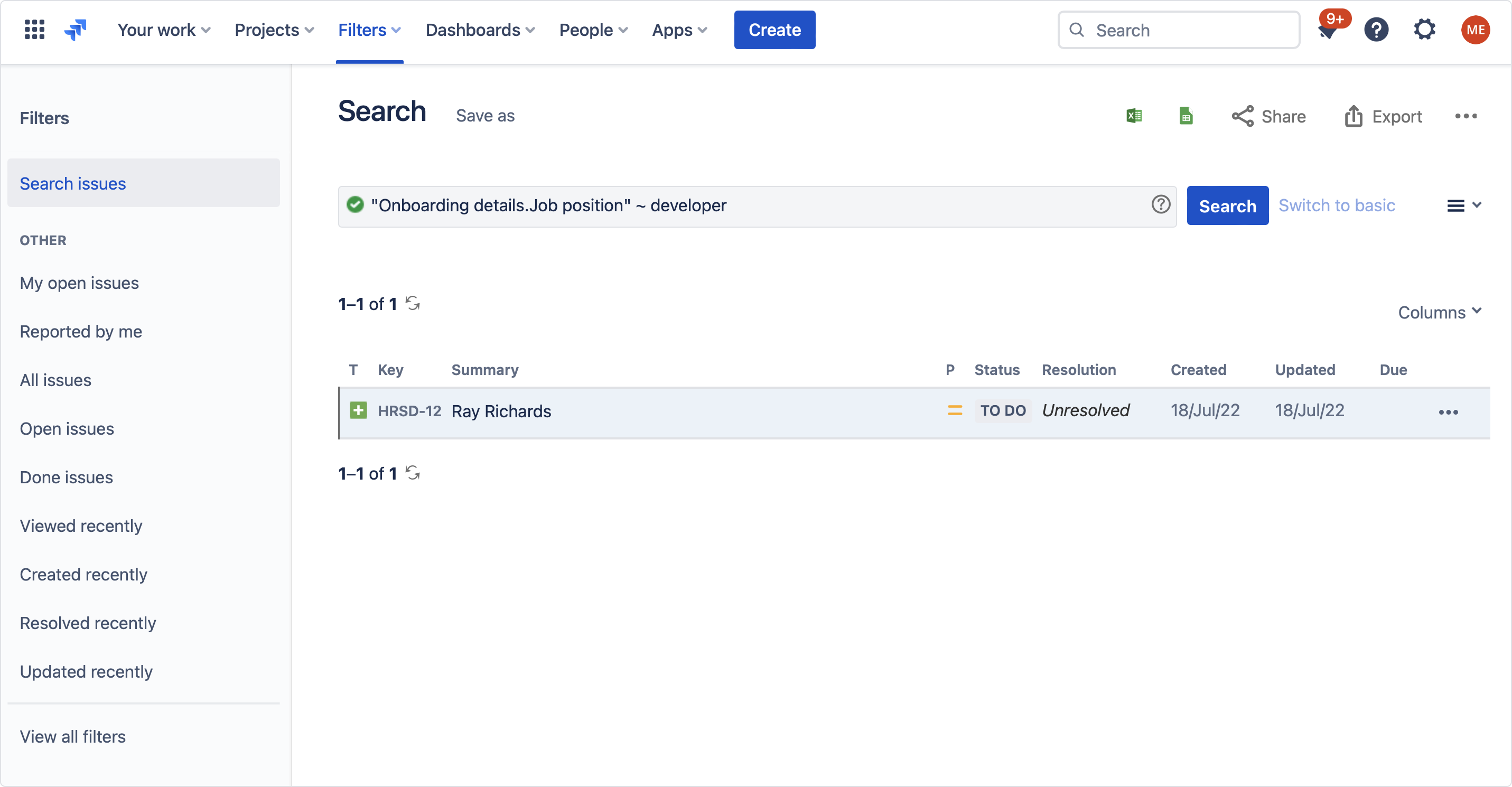
Learn how search through work items using Bundled Fields data.
Extension for Jira Service Management supports JQL searching for all the work items that contain Bundled Fields. You can search for single subfields or their specific values.
Due to ongoing platform improvements, certain views presented in documentation may not fully reflect the latest in-app changes. We’re actively updating our content to match the new experience.
The new Bundled Fields Search introduces a precise search experience to make your work with data related to Bundled Fields efficient and enjoyable. To start using the new search, it’s necessary to enable the functionality in the app configuration.
Go to Marketplace apps > Extension for Jira Service Management. Navigate to Bundled Fields Search and go to the Enable search tab.
Once you access the view, it’s possible to turn on the Enable new Bundled Fields search toggle.
By default, new JQL searching within Bundled Fields is possible for all new work items. To make sure all your data is searchable, you can run a one-time synchronization to structure all your work items properly and enjoy the new search experience.
To run a synchronization, navigate to the Synchronize data tab and click Start. This will initiate a process during which you can monitor the progress of each Bundled Field sync in real time.
To prevent data inconsistency, don’t change the Bundled Fields settings until synchronization is finished.
If any field encounters an error, simply use the Rerun option to attempt the synchronization again. Once a field displays the Success status, its data is fully indexed and ready for use within the new JQL search experience.
Data related to Bundled Fields is available for JQL search only when the Enable search functionality is turned on. Once you turn off the functionality for a particular period of time, it won’t be possible to find data generated during this time.
Use the bundledFieldSubfieldValue function when you want to search a specific, named Bundled Field to get the most accurate results. Use the subfieldValue function if you want to search through every Bundled Field in Jira at once to find a matching piece of information.
To help you get the most out of your data, we’ve developed a list of dedicated JQL functions. In the sections below, you’ll find the list with particular functions and practical examples that can help you understand how to find relevant Bundled Fields’ data in seconds.
When you need to find work items based on a specific value within Bundled Field, use the bundledFieldSubfieldValue function. It allows you to dig into the details of your complex forms and filter work items with pinpoint accuracy.
This function requires three parameters: (“Bundled_Field_Name”, “Subfield_Name”, “Value”), the name of Bundled Field, the specific subfield you are searching within, and the exact value you want to match.
| Syntax | Usage | Supported fields |
|---|---|---|
| bundledFieldSubfieldValueGreaterThan | Checks the specified Bundled Field and returns work items where the subfield’s number is strictly higher than your value. | Number, Date & Time |
| bundledFieldSubfieldValueLessThan | Filters the specified Bundled Field to find work items where the subfield’s number is strictly lower than your value. | Number, Date & Time |
| bundledFieldSubfieldValueGreaterOrEqualThan | Matches work items where the subfield value is at or above your specified threshold. | Number, Date & Time |
| bundledFieldSubfieldValueLessOrEqualThan | Matches work items where the subfield value is at or below your specified threshold. | Number, Date & Time |
| bundledFieldSubfieldValueEquals | Performs a precise match, returning only work items where the subfield contains exactly your specified value. | Select, Multiselect, Checkbox, Radiobutton, Number, Date & Time |
| bundledFieldSubfieldValueNotEquals | Excludes any work items where the subfield matches your value, showing you everything else within the specified Bundled Field. | Select, Multiselect, Checkbox, Radiobutton, Number, Date & Time |
| bundledFieldSubfieldValueIsNotEmpty | Identifies work items where a particular subfield within the specified Bundled Field contains any data. | Select, Multiselect, Checkbox, Radiobutton, Number, Date & Time |
You can use the bundledFieldSubfieldValueLessOrEqualThan function when you want to find a specific Bundled Field and filter it for numeric values that are at or below a certain threshold. It can serve as an essential tool for budget tracking, capacity planning, or monitoring low-stock levels.
Imagine having a Bundled Field entitled Travel Expenses which contains a subfield called Estimated Cost. If you want to find all travel requests that stay within a strict budget of $1,200, you can use:
workItem in bundledFieldSubfieldValueLessOrEqualThan("Travel Expenses", "Estimated Cost", "1200")
As a result, Jira will return all work items where the cost is exactly 1200 or any number lower. This ensures you see all requests that successfully meet your budgetary requirements.
The subfieldValue function scans every Bundled Field at once for a specific subfield name. This function is recommended when you use common subfields across multiple different forms and want to see all related data in one unified view.
This function requires two parameters: (“Subfield_Name”, “Value”), the name of the subfield you are searching for, and the exact value you want to match.
| Syntax | Usage | Supported fields |
|---|---|---|
| subfieldValueGreaterThan | Scans all your numeric subfields across all Bundled Fields and finds work items where the number is strictly higher than your target. | Number, Date & Time |
| subfieldValueLessThan | Finds work items where a subfield within any Bundled Field is strictly lower than your specified number. | Number, Date & Time |
| subfieldValueGreaterOrEqualThan | Returns any work item where a Bundled Field subfield is exactly your value or higher. | Number, Date & Time |
| subfieldValueLessOrEqualThan | Returns any work item where a Bundled Field subfield is exactly your value or lower. | Number, Date & Time |
| subfieldValueEquals | Triggers search across all Bundled Fields to find an exact match for your value. | Select, Multiselect, Checkbox, Radiobutton, Number, Date & Time |
| subfieldValueNotEquals | Shows you every work item except the ones where that specific subfield within a Bundled Field matches your value. | Select, Multiselect, Checkbox, Radiobutton, Number, Date & Time |
| subfieldValueIsNotEmpty | Returns every work item where the specified subfield within any Bundled Field contains any value at all. | Select, Multiselect, Checkbox, Radiobutton, Number, Date & Time |
With subfieldValueGreaterThan you can find work items where a numeric subfield exceeds a certain limit. This function allows for monitoring thresholds or high-value items. It looks for a specific subfield name across your entire instance and checks if the number inside is greater than your chosen value.
Imagine having a subfield named Score used in various evaluation forms. If you want to find all tickets that have a score higher than 75 to identify high-priority items, you can use:
workItem in subfieldValueGreaterThan("Score", "75")
As a result, Jira scans all Bundled Fields for a subfield called Score and displays only the work items where that number is 76 or higher.
By using all JQL functions for Date & Time fields, the displayed date and time formats, presented as YYYY-MM-DD HH:mm (for example: 2026-03-05 13:15), relate to Coordinated Universal Time (UTC) and may not currently align with individual user preferences due to technical constraints. We’re actively working on a resolution to ensure these settings are fully supported.
If you need to find a specific keywords hidden within your data, you can scan your Bundled Fields for selected words, phrases, or text patterns with the bundledFieldTextLike and bundledFieldTextNotLike functions that can make your search results much more accurate. Both functions support Text field and Text area.
You can use the bundledFieldTextLike(“Bundled_Field_Name”, “Value”) function when you want to perform a broad search for a piece of text. It acts similarly to the standard Jira ~ operator, scanning the entire Bundled Field for your specified value.
Imagine having a Bundled Field called Customer Feedback. If you want to find every ticket where a user mentioned the word login anywhere within that field, you can use:
workItem in bundledFieldTextLike("Customer Feedback", "login")
As a result, Jira returns all work items where the Customer Feedback field contains the word login, regardless of other text surrounding it.
You can use the bundledFieldTextNotLike(“Bundled_Field_Name”, “Value”) function when you want to filter out results that mention certain words.
Imagine having a Bundled Field entitled Support Details. If you want to review it but ignore any tickets that contain the word spam to focus on legitimate requests, you can use:
workItem in bundledFieldTextNotLike("Support Details", "spam")
As a result, Jira will show you all work items except those where the word spam appears within the Support Details Bundled Field.
When you need to identify work items based on whether they contain any data at all, you can use functions that evaluate whether Bundled Fields have been at least partially filled out.
You can use the bundledFieldValueIsEmpty (“Bundled_Field_Name”) function to identify work items where at least one subfield within the specified Bundled Field has been left blank.
Imagine having a Bundled Field entitled Travel Expenses. If you want to find all travel requests where at least one piece of information (like Estimated Cost or Destination) is missing, you can use:
workItem in bundledFieldValueIsEmpty("Travel Expenses")
As a result, Jira will return all work items where the specified Bundled Field has one or more empty subfields, allowing you to follow up on incomplete data.
You can use the bundledFieldValueIsNotEmpty(“Bundled_Field_Name”) function to find work items in which at least one subfield within the specified Bundled Field contains any data.
Imagine having a Bundled Field entitled Support Details which contains multiple subfields such as Product Version, or Environment. If you want to identify all tickets where the reporter has provided any technical information at all to start the triaging process, you can use:
workItem in bundledFieldValueIsNotEmpty("Support Details")
As a result, Jira will return all work items where at least one subfield within Support Details has been populated with a value. This ensures that your support team focuses on tickets that are no longer blank and are ready for initial review.
If you can’t find the answer you need in our documentation, raise a support request.
Include as much information as possible to help our support team resolve your issue faster.